Posts

Bertram Otto: Fake Chinese pick-pocket magician a hit with frontline troops

Image
Ming Chow (translated as 'The Light-fingered One') was a fabulous pickpocket-comedy magician. In real-life, he was Bertram Otto, a British performer and one of the most successful and highly paid after-dinner entertainers in London.  With the onset of World War Two, Bertie Otto signed up with the Entertainment National Service Association, known as E.N.S.A. This was a wartime organisation established to provide entertainment to the British armed forces, at home and abroad. He was appointed as the manager of the  Lucky Dip  concert party and put in charge of group of eight or nine fellow performers.  " Bertie was an excellent manager, very responsible and sensitive, despite being in great discomfort due to stomach ulcers. He spoke seven languages which was incredibly useful on our travels, " recalled Joy Tudor, a singer-dancer with the group. Lucky Dip  sailed in a KMF convoy from Liverpool to Algiers in 1942. " We had a naval e...

Kindertransport magic

Image
Refugees from the Nazi regime began arriving in Britain long before war was declared on 3 September 1939. Many of these were Jews, escaping rising anti-Semitism and Hitler's persecution of their race. In November 1938, following a rise in violent attacks against Germany's Jewish population, the British Government changed its immigration laws. Realising it needed to respond to a humanitarian crisis, the government decided to allow the temporary admission of unaccompanied Jewish children.  Many of the children's parents had been killed by the Nazi regime, or sent to concentration camps. Some parents were still alive, but had sent their children away in the hope that the youngsters would have a better chance of survival away from Germany. Known as Kindertransport , this unprecedented scheme led to 10,000 mainly Jewish children entering the U.K. from Nazi Germany, Nazi-occupied Austria, Czechoslovakia, Poland and the Free City of Danzig. Other children that came were ‘non-Aryan...

Evacuees: memories of magic

Image
Suitcase and teddy bear in hand, wearing labels with their name and age, thousands of British children were taken from their homes and evacuated to the homes of strangers during World War Two.  Civilian  casualties are tragic, but the death of innocent children was considered unacceptable.  Away from the risks of air raids and gas attacks in the cities, millions of kids lived out the war in the relative safety of the country.  Operation Pied Piper, launched in September 1939, was the biggest and most concentrated mass movement of people in Britain’s history. After the fears of bombing weren’t realised, many of the evacuees were returned home, until France fell to Germany in 1940, and bombing campaigns started with a vengeance in Britain. The evacuation plan started again. Some children returned home in the summer of 1941, after the Battle of Britain was won. When V1 rockets began falling on London in June 1944, the evacuee programme kicked in for a third time. Evacue...

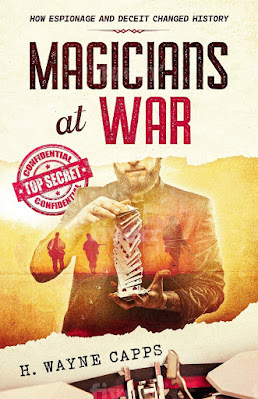
New book: Magicians at War (2020)

Image
Great to see a new (short) book about 'magicians at war'. I'm not going to review it here, but here's the blurb from Amazon (April 2020, 96 pages):   "In Magicians at War , H. Wayne Capps, a professional magician and military officer, takes an in-depth look at magicians of past who have used their skill of deceit and misdirection to serve the nation they love. Was Houdini a spy, was WWII stopped by a single card trick and does the CIA use magicians in the field? These are just some of the questions answered in Magicians at War , along with some of the most amazing war stories ever told!"   Magicians at War: How Espiona ge and Deceit Changed History (book) Capps, H. Wayne. Magicians at War (2020).

Magic at the movies

Image
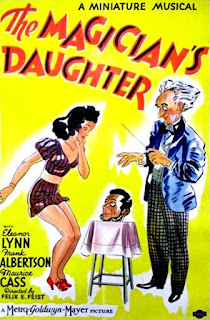
During wartime, cinema remained an extremely popular pastime. In Britain alone, between 25 and 30 million cinema tickets were sold each week.  Movies provided war-weary audiences an escape from the turbulence and sacrifice of war, while also providing an opportunity for nations to boost morale, through government-funded propaganda films.  The epic American film  Gone With The Wind  (1940) was the smash hit of the war, but British films such as  In Which We Serve  (1942) and  Millions Like Us  (1943) were also highly successful.     Magic-related plots, scenes, or magician characters were a steady feature in films released during World War Two. Here's a selection : The Magician's Daughter (1938). Playing in British cinemas in the summer of 1939, as war was breaking out across Europe, The Magician's Daughter is a 'movie short' made by MGM Pictures.  Billed as a "miniatu re musical" the title character falls in love with a magaz...

Magic Marine awarded U.S. Medal of Honor

Image
1st Lieutenant George H. Cannon was the first U.S. Marine to receive the Medal of Honor in World War Two. The medal is the U.S. government's highest and most prestigious military decoration for acts of valour by American service personnel. In high school, George Cannon was in the magic club and retained a keen interest in magic as he went off to university. He studied engineering at the University of Michigan, graduating in 1938, before joining the U.S. Marine Corps as an officer candidate. He commissioned and, with war imminent, was sent to Midway Island in the Pacific, arriving on 11 September 1941. The Midway Atoll, as its name suggests, lies nearly halfway between Hawaii and Tokyo. It was vital base for the likely impending conflict between the United States and Japan.  On Sunday 7 December, 1941, Cannon, age 26, was assigned as platoon leader of H Battery of the 6th  Defense Battalion. His task was to defend a critical power station on Sand Island.  1st Lieutena...

Jasper Maskelyne: War Magician?

Image
Jasper Maskelyne, famed early Twentieth Century magician and illusionist, is often referred to as the 'War Magician'.  This nickname originates, mostly, from David Fisher's 1983 book, aptly titled, The War Magician: The man who conjured victory in the desert . Fisher tells the story of Maskelyne's background as a stage magician and his exploits during World War Two, when he joined the British Army intent on using magic to defeat Hitler. Unfortunately, the book - while an interesting read - is highly fictionalised, despite the author's assertion that " everything Jasper Maskelyne is credited with doing he actually accomplished ".  Had he attempted a factual account of Maskelyne's contribution to the war effort, Fisher wouldn't have been helped by his source material.  Much of Fisher's story is based on Maskelyne's book Magic - Top Secret (1949) (ghost written by F. S. Stuart), which itself exaggerated the facts, claimed accomplishments whic...

Making money appear!

Image
Wars aren't cheap. Put aside the human sacrifice and the social, environmental and political upheaval, there's also the financial cost. For America - and for many other nations - World War Two was their costliest war. The total bill was almost US$5 trillion (adjusted for today's prices). And, given that the U.S. didn't join the war until December 1941, this money covered just the 3 years and 9 months of their involvement. Great Britain and other nations endured six years of war. While the government might wish to hire a load of magicians to make money appear, that wouldn't work in reality. But, many magicians were employed to make money during the war. Here's how... One way that modern governments finance war, is by putting additional money into circulation. In effect, printing money ('magic money'?). But, putting lots of money into an economy will drive up inflation. To compensate for this, governments sell debt securities, known as war bonds. The funct...